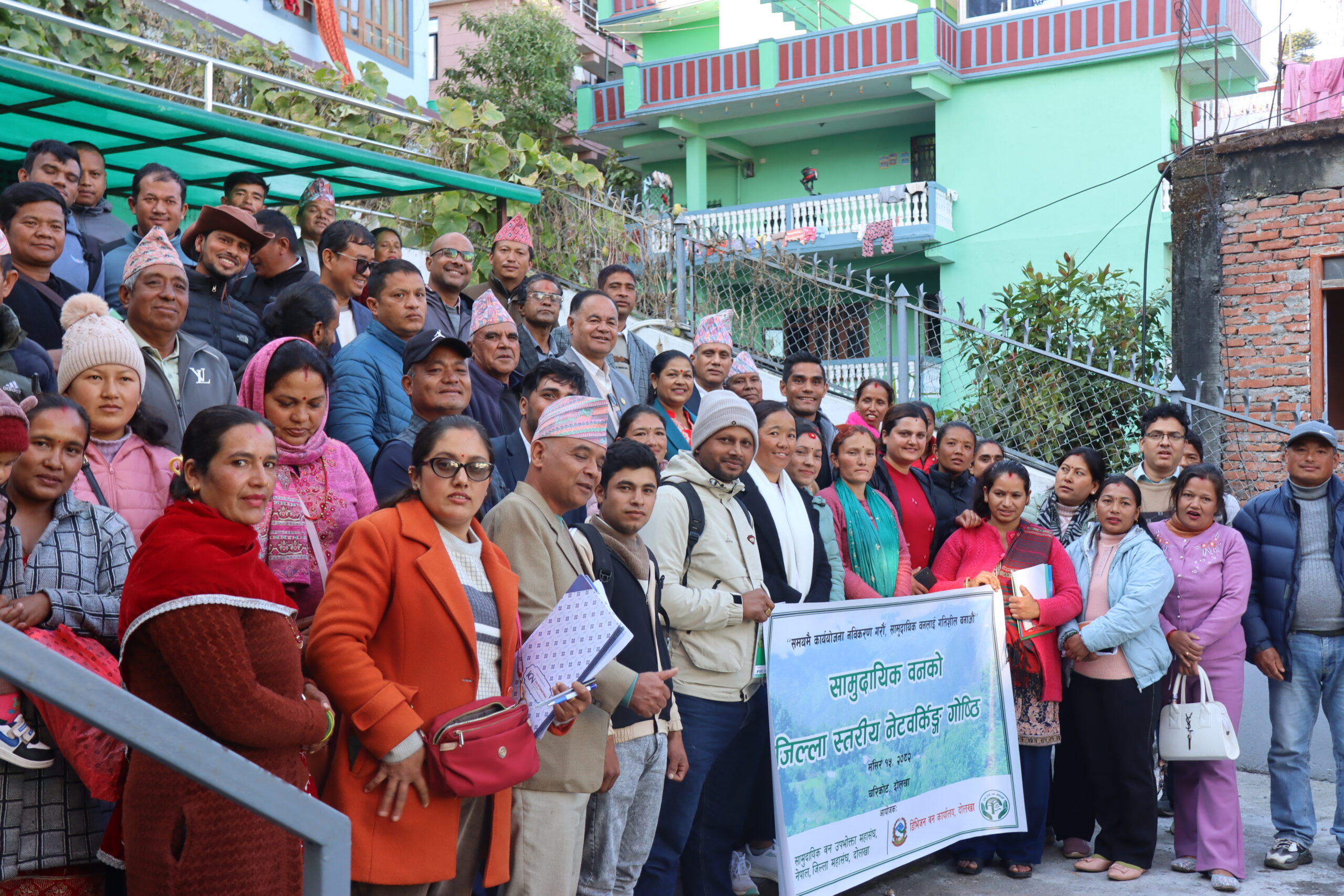
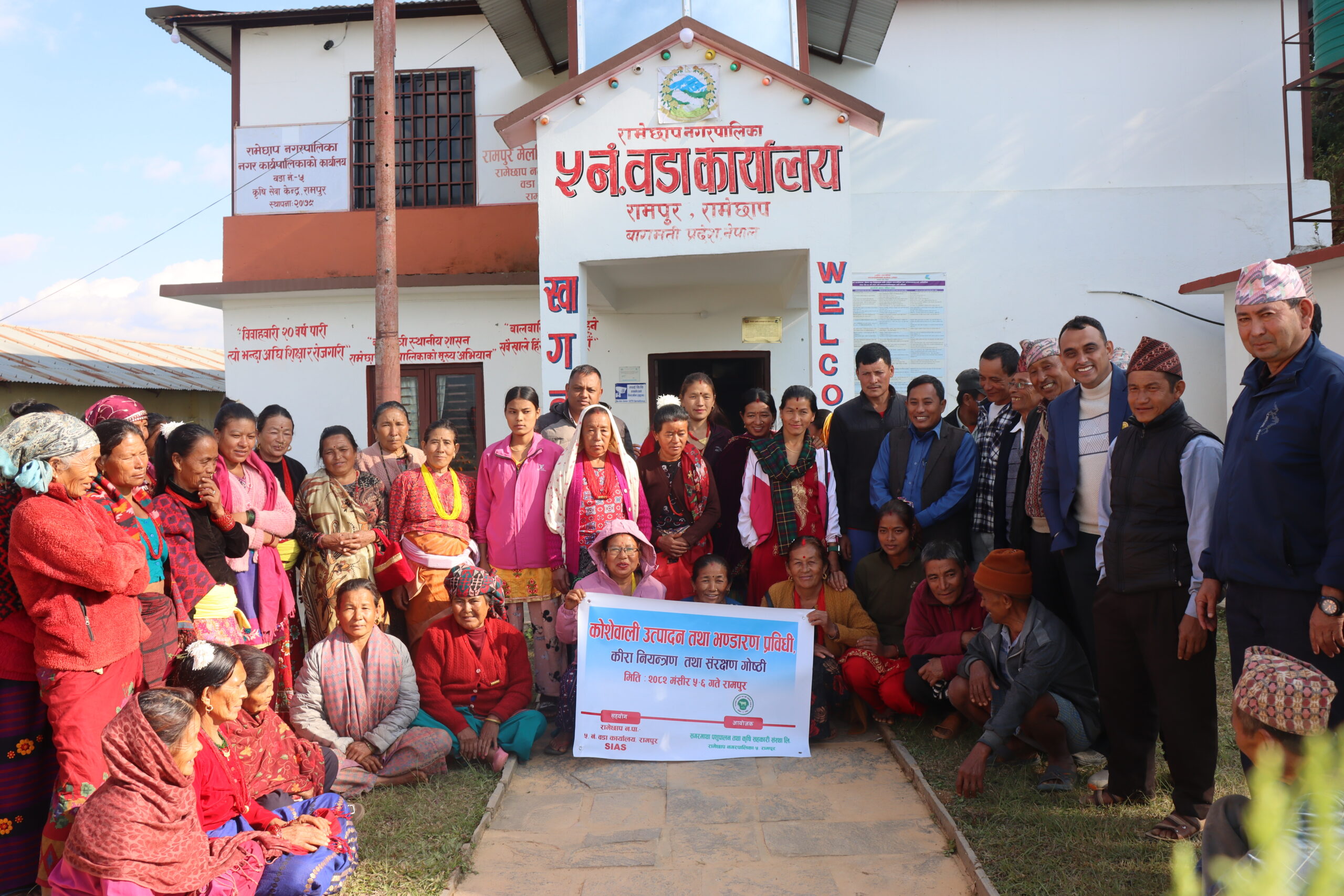
Southasia Institute of Advanced Studies (SIAS), in collaboration with the Swedish University of Agricultural Sciences (SLU) and the District Federation of Community Forestry Users Nepal (FECOFUN), successfully organized a Local Level Dialogue on “Wildlife on the Farmland: Problem, Struggle, and Mitigation” on 6 November 2025 in Charikot, Dolakha. The dialogue brought together about 30 participants, including affected farmers from Boch Ward No. 8 and Dharamghar, Ward No. 5 of Bhimeshwor Municipality, ward chairs, the deputy mayor of the municipality, officials from the Division Forest Office, Dolakha, and representatives from community forest user groups. The event aimed to present some of the early findings of the ongoing research, gather feedback, and discuss potential mitigation measures.
The dialogue began with an introduction by the Secretary of District FECOFUN, Dolakha, followed by a presentation by Dr. Govinda Poudel and Binod Adhikari, researchers from SIAS. They provided an overview of the early research findings, showing how local farmers have been facing serious agricultural losses caused by wild animals, particularly rhesus monkeys. Their presentation highlighted farmers’ struggles, the responses made by both farmers and local government, and the current state of the problem, which helped to open the floor for discussion.
Dr. Dil Bahadur Khatri, Executive Director of SIAS, facilitated the discussion session. The floor was then opened for participants to share their thoughts and perspectives on the issue. Farmers emphasized the urgent need for government action to address the escalating wildlife problem. Deputy Mayor of Bhimeshwor municipality, Kamala Basnet shared the measures taken so far by the municipality and explained why these local-level responses have been inadequate to resolve the issue.
At the end of the discussion, Dr. Dinesh Poudel, Senior Research Fellow at SIAS, and Jaganath Basnet, Chairperson of District FECOFUN, wrapped up the session by summarizing the major discussion points. One of the key points raised was that, despite several efforts made by local communities and the local government, the problem persists and can only be effectively addressed by the federal government through appropriate policy reforms.