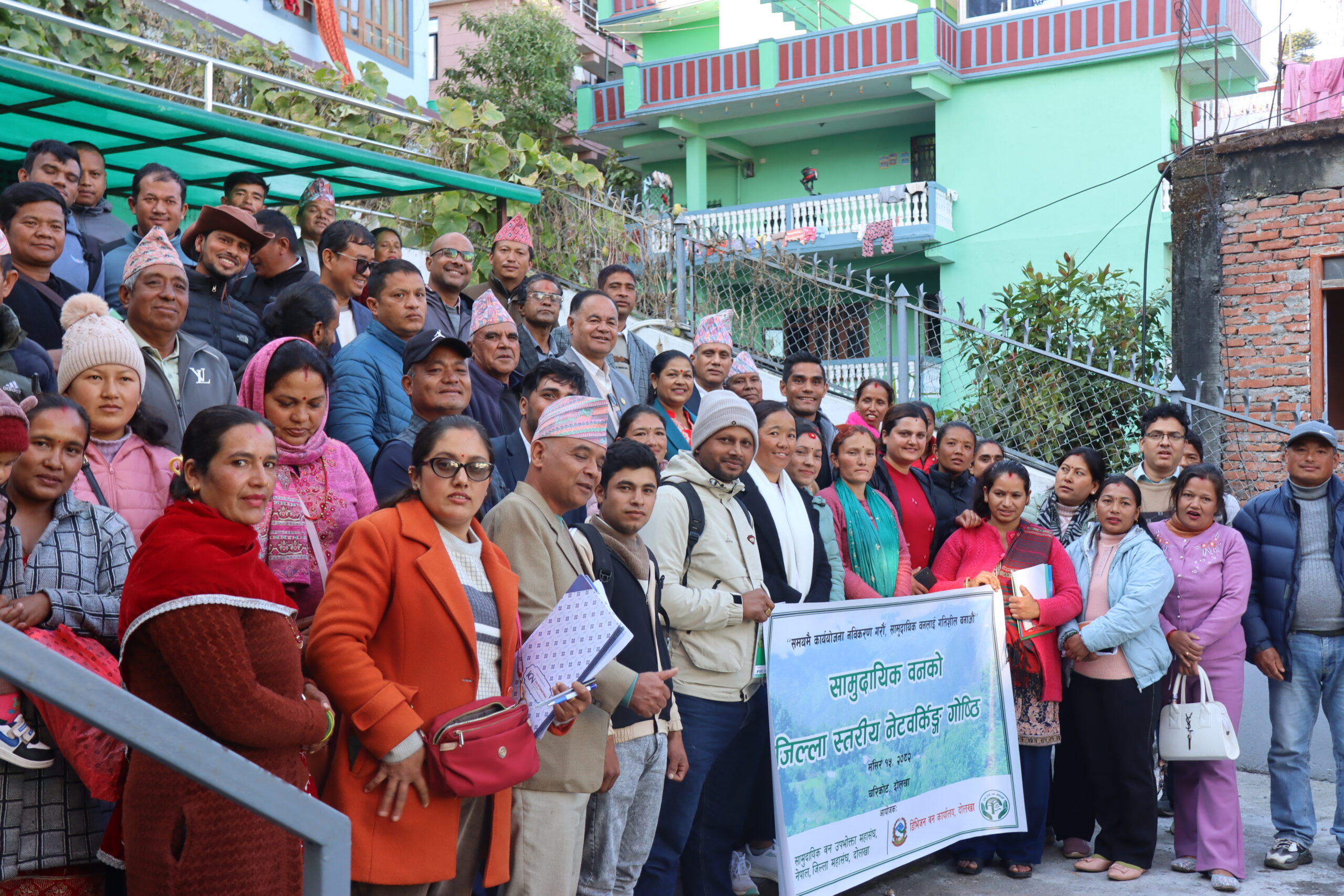
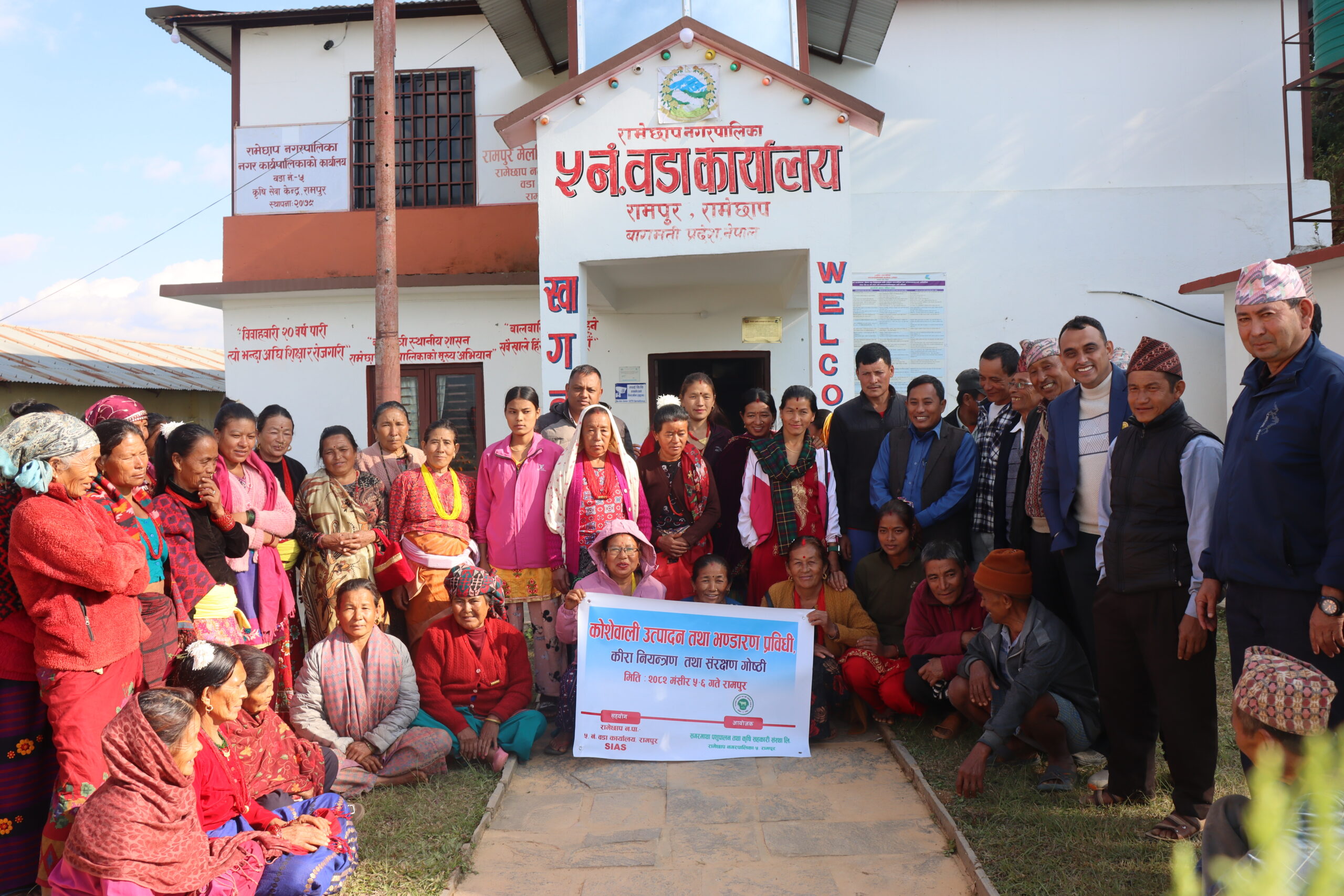
An event on “Forest-Based Enterprises: Opportunities, Challenges, and collaboration “was held at Bhimeshor Municipality Hall, Dolakha on 22 August 2025. The program was jointly organized by District Federation of community Forestry Users Nepal (FECOFUN) Dolakha, SIAS, and Bhimeshor Municipality.
The Chairperson of District FECOFUN Dolakha delivered a presentation titled “Enterprise Development Based on Forest Resources: Prospects, Opportunities, Challenges, and Collaboration.” The presentation highlighted past projects and initiatives to support enterprises, reviewed the current status of forest-based enterprises, and outlined examples of enterprises currently in operation. It also discussed the potential enterprises that community forests can promote, the opportunities available for enterprise operation, and suggested ways forward for sustainable growth.
Deputy Mayor of Bhimeshor Municipality, Kamala Basnet, shared details of the Bhimeshor Municipality Women’s Self-Reliance Campaign. Under this initiative, 180 women, 20 from each ward, have been supported. Priority was given to women already engaged in enterprises, and leadership training was provided to them. This year, the municipality will support each participant with NPR 15,000 to help expand their enterprises.
A panel discussion was then held with the participation of community forest chairpersons, secretaries, and local forest-based entrepreneurs, who shared their experiences and challenges. The session was facilitated by community forest activist Bhola Khatiwada.
The District Forest Officer (DFO) of Dolakha emphasized that community investments should also focus on forest management. He noted that timber harvesting and management create significant job opportunities and stressed that forest management itself should be recognized as an enterprise. He highlighted the example of Khorthali Community Forest, which has successfully practiced optimal timber harvesting, and expressed the division’s commitment to replicate similar practices across Dolakha.
Similarly, Dil Khatri, Executive Director of SIAS, remarked that not everyone is suited to be an entrepreneur, and the first step is to identify those who truly have entrepreneurial qualities. He pointed out that many community-based enterprises and donor-funded projects have failed in the past, emphasizing the need to critically examine and learn from these failures before designing future interventions.
The event concluded with a shared understanding that while community forests hold great potential for enterprise development, there are pressing challenges in identifying genuine entrepreneurs, ensuring sustainability, and balancing enterprise promotion with responsible forest management.